
our team
Our Team
-
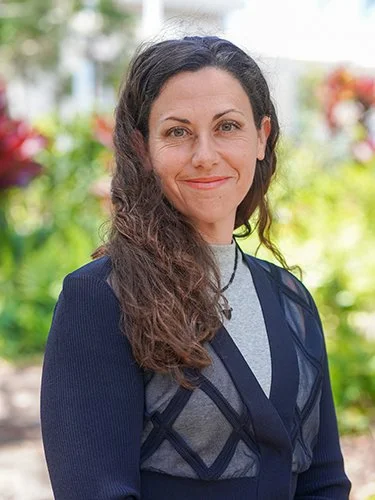
Catherine Pirkle, PhD
Role: Professor
Trained in both life-course and environmental epidemiology, I have worked across the globe investigating and addressing systems and structures that contribute to positive and negative health outcomes. I have done extensive work globally on health systems and quality of care, especially in the field of maternal and child health. My work in Hawaiʻi, and globally, has involved close collaborations with governmental agencies, health service providers, and community-based organizations. I am particularly interested in the health effects of pivotal reproductive health milestones, in both men and women, across the life course. I have investigated age at first birth, lifetime childbirths, age and type of menopause and their associations with indicators of disablement. I also work in environmental health, especially related to marine pollution, food security, and envenomation. My work in environmental health has brought me to the Canadian Arctic, Republic of the Marshall Islands, Bermuda, Republic of the Philippines, and Colombia. I have active projects in Hawaiʻi on Oceans and Human Health and the 2021 Red Hill Jet Fuel spill. I am the Scientific Director of the Thompson School Registry Hub, which provides technical assistance to the Red Hill Independent Registry.
-
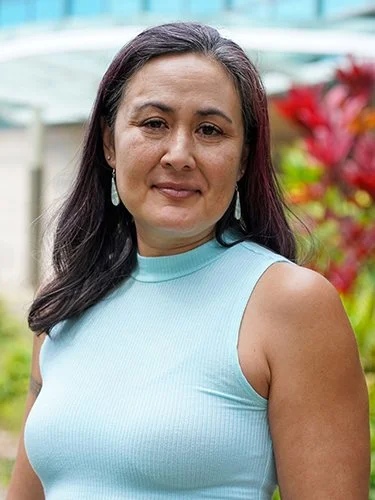
Lorinda Riley, SJD
Role: Associate Professor
Dr. Riley holds a joint appointment with Native Hawaiian and Indigenous Health at the Department of Public Health Sciences and Kamakakūokalani Center for Hawaiian Studies at Hawaiʻinuiākea School of Hawaiian Knowledge. Dr. Riley’s research interest is on indigenous conceptions of wellbeing as well as policies related to indigenous social determinants of health. Specifically, she is interested in the impact of the criminal justice system on indigenous people vis-à-vis traditional indigenous restorative and the impact of self-determination on indigenous wellbeing.
-
Rachel Dacks, PhD
Role: Investigator
Rachel Dacks is an Assistant Professor in the Department of Natural Resources and Environmental Management at the University of Hawaiʻi at Mānoa. She grew up in Miami, FL and first came to Hawaiʻi as a protected species fisheries observer, working on longline tuna boats. While her early academic background and work experience focused on marine ecology and fisheries, her experience as a Peace Corps volunteer in a small Indigenous village in Fiji made her acutely aware of the need to incorporate sociocultural factors into conservation planning. Her research focuses on using qualitative and quantitative methods to better understand complex human dimensions of natural resource management across the Pacific Islands region. She is specifically interested in how monitoring and evaluation of conservation and resource management interventions can be guided by biocultural approaches, in order to reflect the wellbeing of the entire system.
Alumni
-
Jessica Kaneakua, MA, MLS
Facilitator/Community Consultant
-
Lauren Hansen, MPH
Former GRA
-
Kristin Lau, BA
Former APLE Student
-
Cade Akamu, MPH
Former GRA
-
Jan Holtge, PhD
Research - Volunteer
-
Kristina Hulama, MSW
Research - Volunteer